Author name: giftworksuuh

Please Help Give Breanna a Second Chance at Life

Click Icon to Share:

Right now in the United States, more than 100,000 people are waiting for a kidney transplant. The demand is high, and sadly, many patients wait years for a kidney from a deceased donor. During that time, their health can decline, making the wait even more difficult.


Please Help Give Rich a Second Chance at Life

Click Icon to Share:

Across the United States, more than 100,000 people are currently waiting for a kidney transplant—and the list continues to grow. Unfortunately, the wait for a deceased donor kidney can take years, and during that time, many patients like Rich face worsening health and increased challenges.

I’m Grateful For Every Bit of Help I Receive

Click Icon to Share:

I have learned that strength does not mean doing everything on your own. It means accepting help when you need it and knowing that you are not alone in your struggle. I am surrounded by people who care and that gives me hope. That gives me courage.

A Small Action Could Have A Huge Impact On My Life

Click Icon to Share:

But through all of this, what continues to lift me up is support. The smallest act of kindness makes a difference. Whether it is someone sharing my story or just reaching out to check in, it reminds me that I am not alone. A conversation, a prayer, or simply spreading awareness about organ donation can ripple out in ways none of us may ever fully see.

Myth: A kidney from a living donor doesn’t last long.

Click Icon to Share:

Living kidney donation is also incredibly safe. Thousands of people each year choose to donate a kidney and go on to live long, healthy lives. In fact, many living donors say they would donate again if they could.

Myth: Kidney donation surgery usually leaves a lot of scarring.

Click Icon to Share:

Advances in surgical techniques have made kidney donation far less invasive than many people imagine. Most living kidney donations today are performed using laparoscopic surgery, which involves small incisions—usually three or four—that heal with minimal scarring. Donors often return to normal daily activities within weeks, and most go on to live long, healthy lives.

Myth: You can’t donate to someone who lives in a different city.

Click Icon to Share:

Living kidney donation is not limited by geography. You can donate a kidney to someone who lives in another city—or even another state. Hospitals and transplant centers work closely with donors and recipients to coordinate care, including travel and accommodations. In fact, many donors and recipients don’t meet until the transplant process begins.

Advocating For Eric

Click Icon to Share:

Eric has been living with kidney disease since he was just 11 years old. Over the years, he’s faced unimaginable challenges — not one, but two kidney transplants that ultimately failed. Now, he’s back on dialysis, which takes up 25–30 hours of his week. It leaves him exhausted, but it hasn’t taken away his spirit or his hope.

Hope Grows Stronger With Every Share

Click Icon to Share:

Support, in all its forms, truly matters. Whether it is a comment, a conversation, or someone spreading awareness on my behalf, it adds up. It reminds me that I am not alone in this. That people care. That we are all connected in ways we sometimes forget.

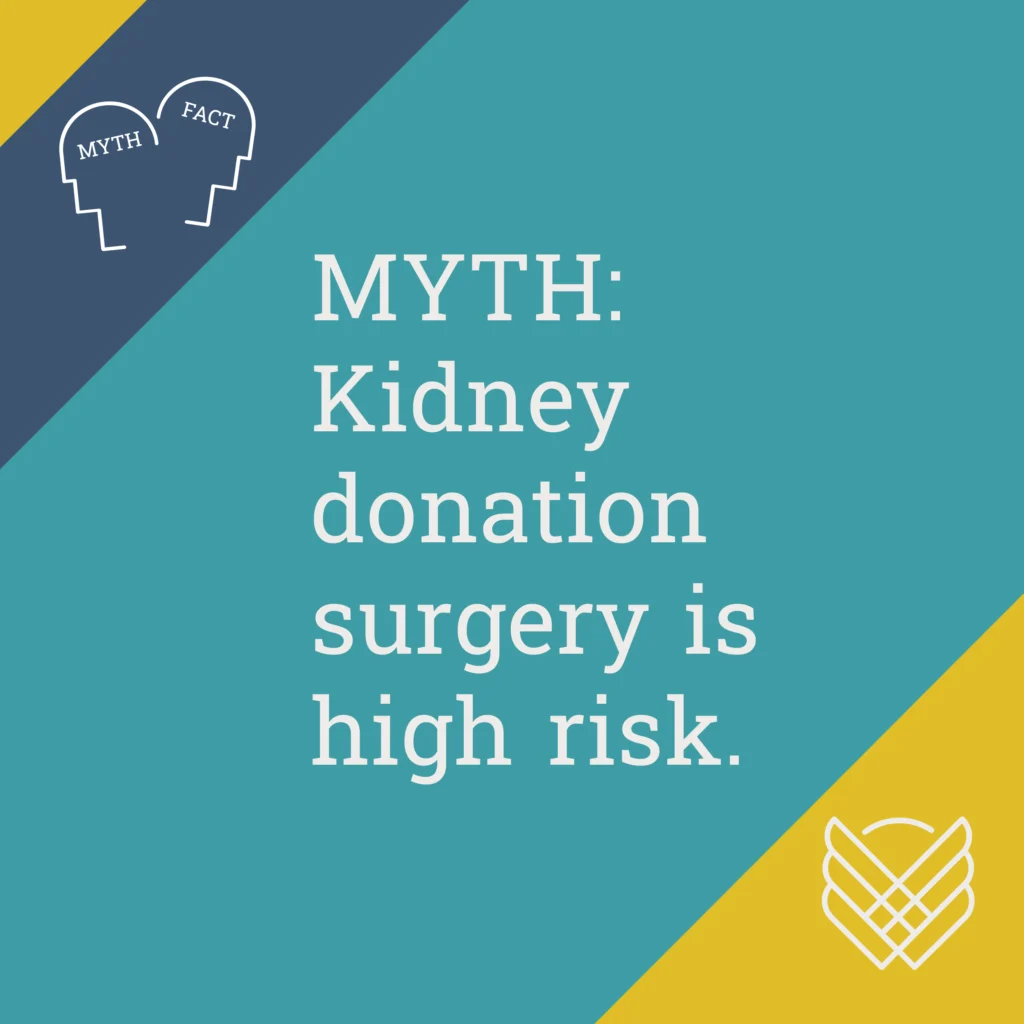
Myth: Kidney Donation Surgery is High Risk.

Click Icon to Share:

This is one of the most common misconceptions about living kidney donation. In truth, kidney donation is a safe procedure for healthy individuals. While all surgeries carry some risk, living kidney donors are carefully evaluated to ensure they are in excellent health before surgery. Most donors return home within a few days and resume normal activities in just a few weeks.

Scroll to Top